Online · Worldwide · Exam Season 2027
IB Physics Exam Prep
by a Theoretical Physicist
I help IB Physics students turn 4s and 5s into 7s.
Strategic exam preparation, not more textbook reading.
Taught by a theoretical physicist who worked on a satellite mission — not a marketplace tutor.
Harvard, Cambridge, ETH Zurich & Ivy League admits · Students across 12+ countries · Average 7 boundary: just 68%
3 spots remaining for the May 2027 exam year
Where some of my students study
The Reality
The Numbers Behind Every University Rejection Letter
of IB Physics HL students score below 7.
Cambridge Engineering requires 41–42 IB points with HL 776 — and a 7 in Physics. Oxford Physics shortlists just 2.5 candidates per place for interview. The margin for error is zero.
is the average 7 boundary in IB Physics HL.
You can get roughly a third of the exam wrong. The grade boundary isn't 90%. It isn't 80%. Most students never learn this number — and they study as if perfection is required, burning time on topics that barely appear.
The global average IB Diploma score.
Cambridge wants 41–42. Oxford Physics wants 39 with 766 at HL. Harvard admits typically score 40–42. That gap between 30 and 40 is the gap between a rejection email and an offer letter.
Differentiation
A Physicist for Special Operations
I studied the same branch of physics as Einstein and Hawking. Spent years analysing IB exams to find where the marks are. I worked on satellites and consult for quants and AI companies.
Theoretical physicist
I made an impact in the areas of black holes, quantum field theory, and general relativity. Most notably, I ruled out a class of black hole solutions.
IB exam analyst
Years of past paper analysis. Which themes dominate Paper 2, which command terms are misunderstood, where students leave marks on the table.
Satellite research
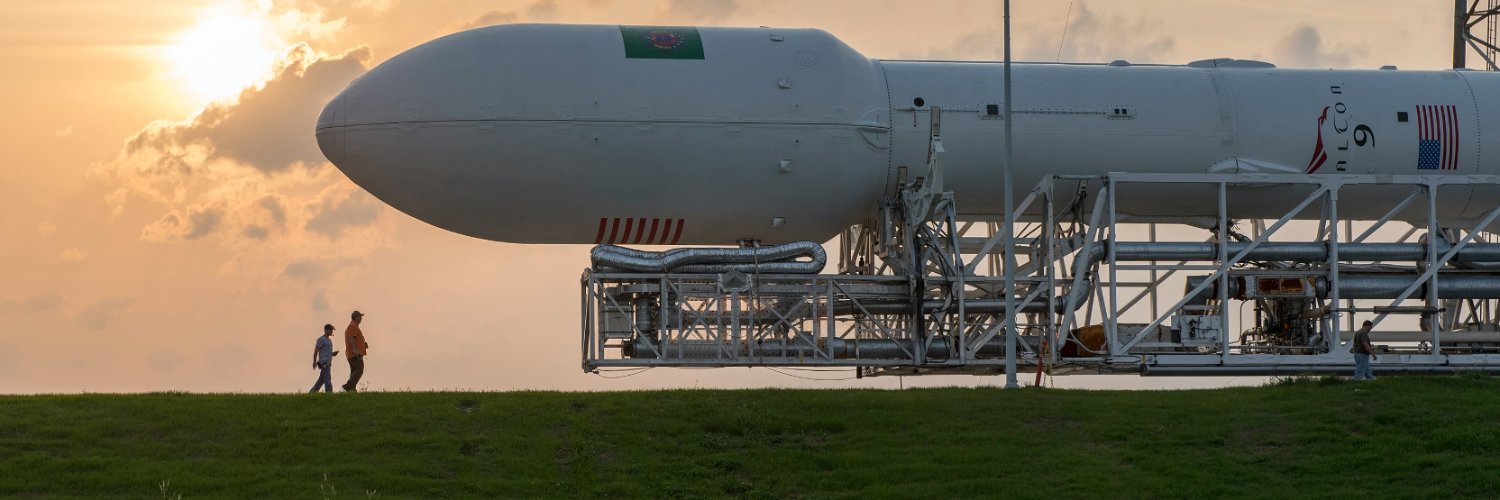
I was part of a satellite project involving six satellites from around the world.
12+ countries worldwide
Students from Geneva, London, Dubai, Singapore, Hong Kong, Tokyo, and San Francisco.
Cambridge, Oxford, MIT
My students get admitted to universities that demand the highest IB Physics grades. I know what 776 HL actually means in practice.
AI & deep-tech advisor
I consult for AI companies, quants, and venture-backed startups.
The Process
How This Works
Book a free 60-minute lesson
Not a sales call — a real lesson. Your child solves problems while I find exactly where the marks are going, and what to ignore entirely. You leave with a written plan.
Fix what matters
Weekly strategic sessions with a shared whiteboard. Targeted and efficient.
Walk in ready
Paper 1A, 1B, Paper 2 — no surprises. Your child knows exactly what to write, where the marks are, and how to collect them.
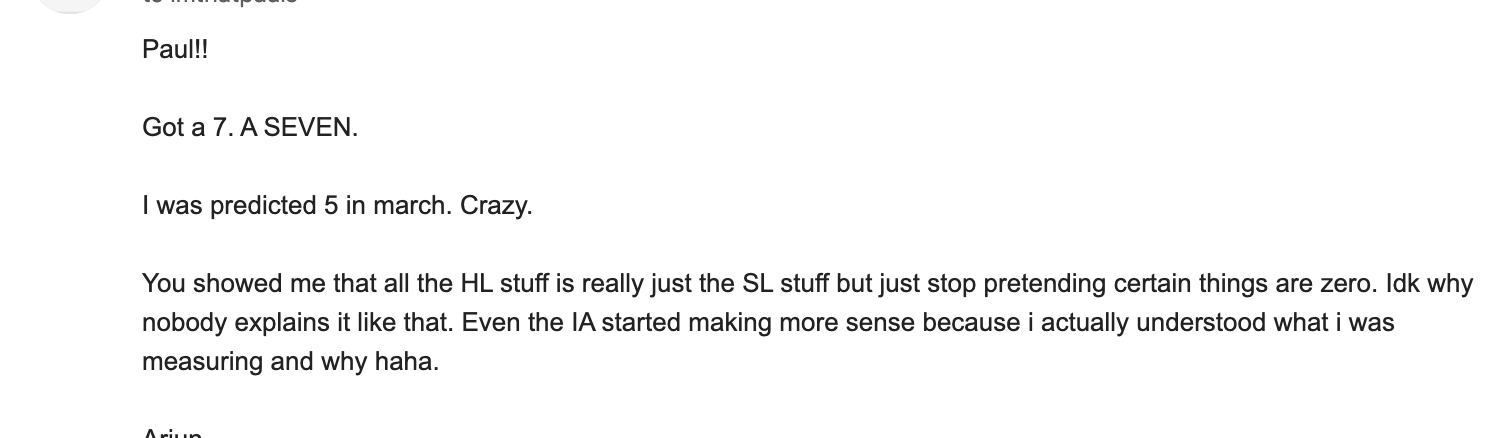
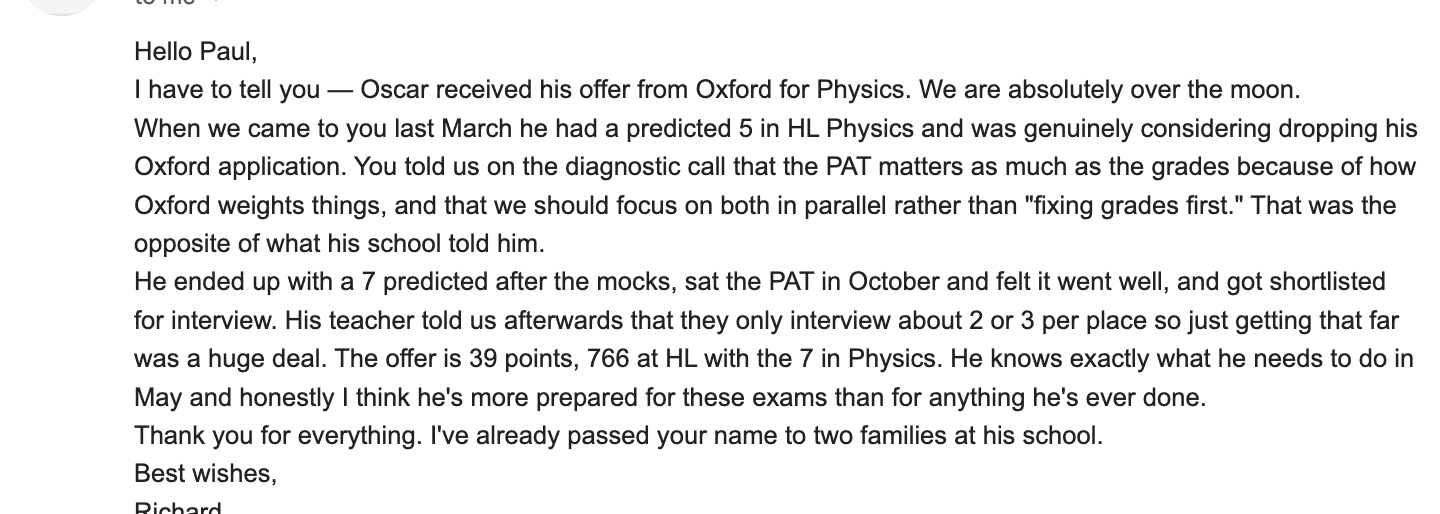
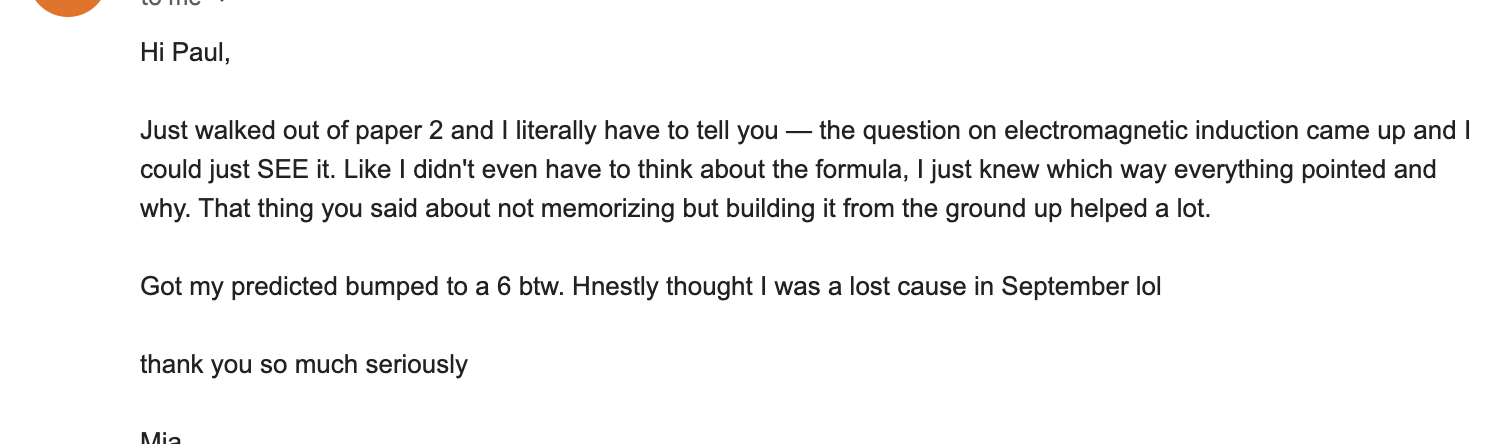
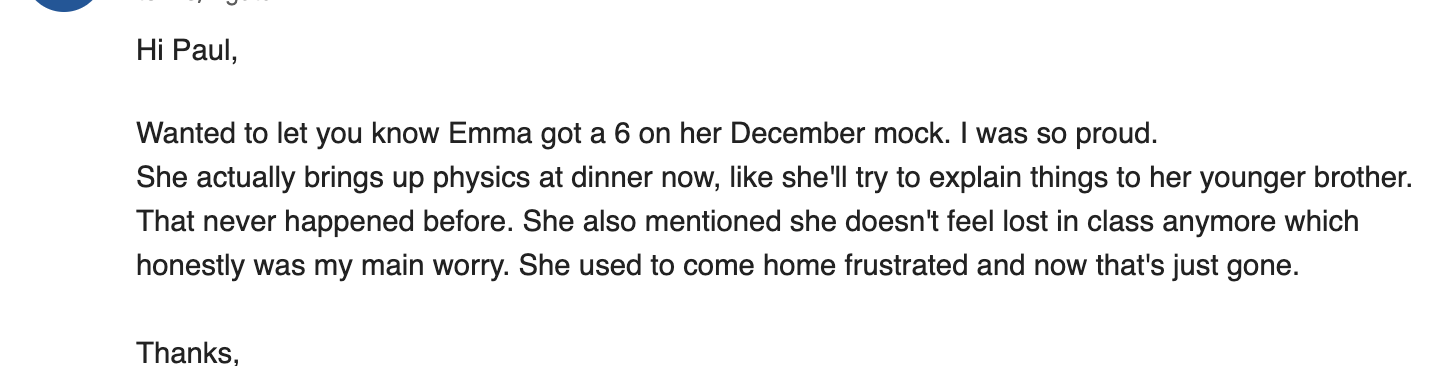
IB Physics Tutoring Results — Real Student and Parent Testimonials
Next step
Start With a Free Lesson
3 spots remaining for the May 2027 session · Exams in -- days
- ✓ 60-minute strategic session
- ✓ Gap analysis & weak point identification
- ✓ Personalised focus areas
- ✓ Weekly 60-min session, fixed slot
- ✓ Ongoing exam strategy & progress tracking
- ✓ Complete Paper 1 + Paper 2 strategy overhaul
- ✓ Mock exams with IB-standard marking
- ✓ IA review & structural feedback
- ✓ Everything in Weekly 60
- ✓ 90 minutes — long enough to finish a full past paper and mark it together
- ✓ Full IA rebuild if needed (worth $500+)
- ✓ 4 mock exams with detailed IB-style feedback
- ✓ Priority scheduling & between-session support
- ✓ University application guidance
Would it be completely absurd to book the free 60-minute lesson right now?
It's free, your child gets a real lesson, and you walk away with a plan.
Questions
What Parents & Students Ask
All sessions run on Discord or Google Meet with a shared digital whiteboard — I can draw diagrams, walk through mark schemes, and solve problems in real time, exactly as if we were sitting at the same table.
Here's the number that changes everything: the 7 boundary in IB Physics HL is approximately 68%. That means a third of the exam can go wrong and you still get the top grade. The IB doesn't use a bell curve — grade boundaries are set by descriptors, not percentiles, which means in theory every student in the room could score a 7 if they all cross 68%. Your child isn't competing against other students. They're competing against a threshold. And that threshold is beatable. I've seen students move from 3 to 6 in ten weeks and from 4 to 7 in eight.
You walk away with a clear picture of what to focus on and what to ignore, even if you decide not to work with me. I run a limited number of these each week, because the constraint is my calendar, not my willingness.
The stakes go beyond admissions. Only 22% of HL students achieve a 7 — my students beat those odds. Physics is the hard signal on a university application. A strong grade tells admissions committees your child can handle rigorous quantitative thinking.
The syllabus has been examined since May 2025, so there are real past papers to work from rather than specimen guesses, and more of them than any cohort before you had. Anyone sitting from now on is the first group who can prepare against a genuine pattern rather than a guess — provided someone has actually studied it.
You don't need to be perfect. You need to be strategic.
The current syllabus has been examined twice — May 2025 and May 2026 — and those two papers are the only real data anyone has. I have been through both, line by line. Paper 2 extended-response questions deliberately cross multiple themes — a question might combine mechanics, energy, and fields. Students who studied each topic in isolation get blindsided. Most tutors are still teaching from the old three-paper format.
The IB uses specific command terms — "explain," "deduce," "discuss" — and each one demands a structurally different answer. Most students lose 2–4 marks per paper simply because they write an "explain" answer when the question says "describe."
Paper 1A multiple choice now gives you 2 minutes per question instead of 1.5, and there's no penalty for wrong answers. That's free marks if you know how to eliminate options systematically — and wasted marks if you don't.
That's what I teach.

About
Paul Sobiecki
Theoretical & Satellite Physicist · IB Physics Strategist
I studied theoretical physics to understand how the universe works at its deepest level — black holes, dark matter, quantum field theory. I graduated Summa Cum Laude and ruled out the existence of a class of black hole solutions.
I teach IB Physics because I realised that most students don't fail at physics — they fail at exams.
After analysing years of IB Physics papers, I found something that most students never learn: the exam is far more predictable than it looks. Certain themes dominate Paper 2. Certain command terms trip up the same 80% of students every year. The IA has specific patterns that separate a 15/24 from a 22/24. And the 7 boundary averages around 68% — yet students study as though they need 95%.
I've worked with students across 12+ countries — from international schools in Geneva and Singapore to schools in Dubai, London, Hong Kong, and beyond. My students have been admitted to Cambridge, Oxford, Imperial, ETH Zurich, MIT, and other world-class STEM programmes.
Outside of IB Physics and research in theoretical physics, I advise AI and deep-tech startups. I also tutor physics to quantitative analysts and traders.
IB Physics isn't about being brilliant. It's about being strategic. Let me show you how.
-- Days Until IB Physics Exams.
That sounds like plenty of time. It is about -- weeks — and then subtract the mocks, the Internal Assessment, and every theme your school has not taught yet. What is left is the part nobody plans for.
Universities won't lower their requirements. Cambridge will still want 776 at HL. Oxford will still shortlist 2.5 per place. What separates the students who get there is almost never raw talent — it's who started while there was still time to fix things properly, instead of revising in a panic in April.
Would it be completely unreasonable to spend one free hour finding out exactly where your child is losing marks — while there is still time to do something about it?
3 spots remaining · No obligation · A real 60-minute lesson · A clear plan either way